International Association for the Preservation of Spiritualist and Occult Periodicals


Periodical: La Pensee Nouvelles

Summary:  From Pat Deveney's database:

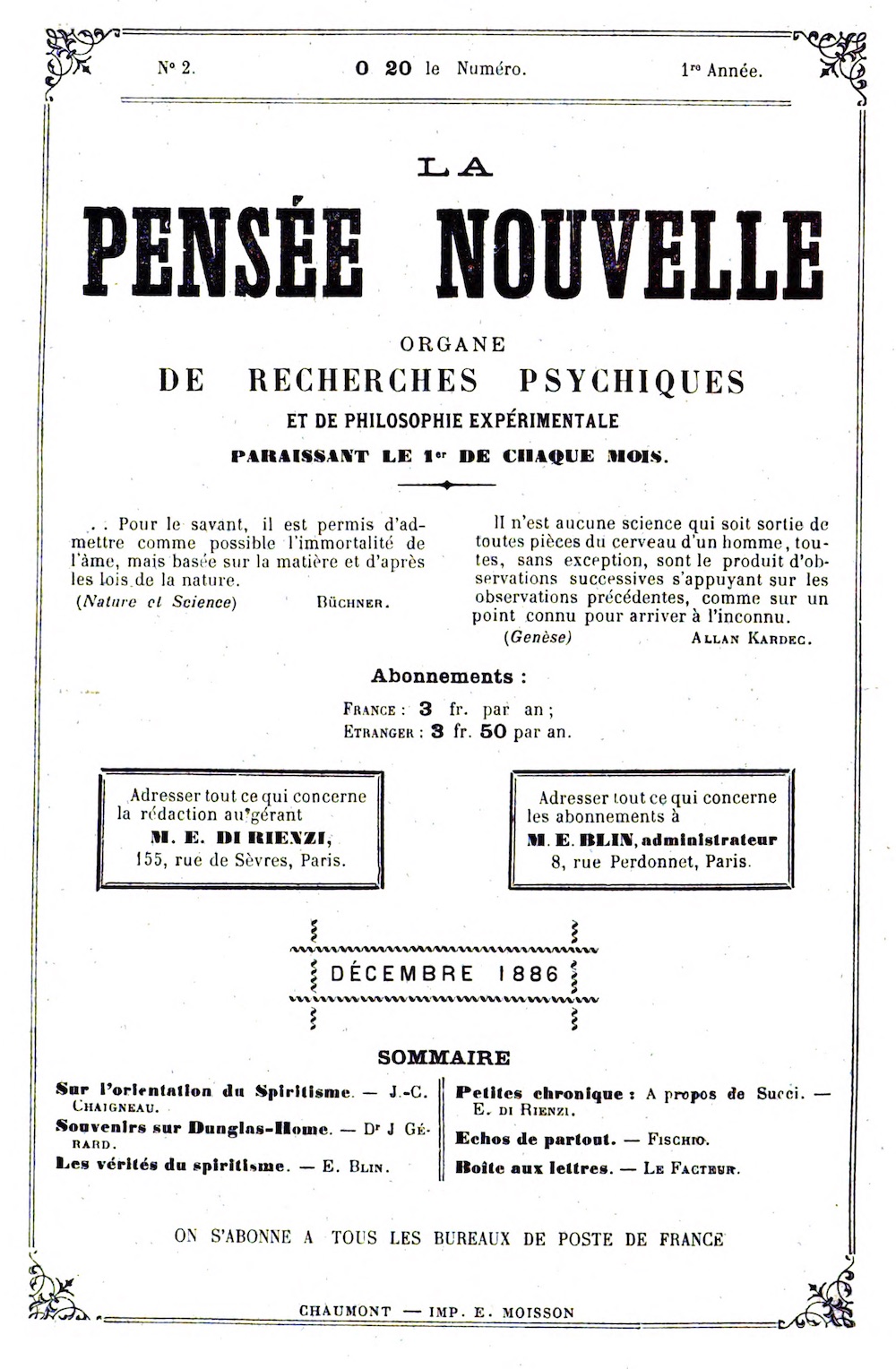
Pensee Nouvelle, La. Organe de recherches psychiques et de philosophie experimentale. 1886--1888 Monthly Paris, France. Language: French. Publisher: emile Blin; Michelis di Rienzi. Editor: emile di Rienzi. Succeeds: La Libre Pensee Succeeded by: La Revue Immortaliste Corporate author: Societe parisienne des Etudes spirites 1/1, November 1886-January 1888. 3 francs a year in France, 3 fr. 50 beyond. emile di Rienzi (1861- ), under his middle name Miklis/Mikelis, was the author of a number of literary vignettes and popular books and seems to have been yet another of the French utopian socialists trying to create a church-less religion. Di Rienzi began this journal in 1886 when he was forced to suspend Libre Pensee, published by the Societe parisienne des Etudes spirites, and started this journal under the auspices of the same society. He was that oddity at the time: a freethinker who believed in the immortality of the soul because of the revelations of the spirits. On di Rienzi, see the note under La Pensee Libre. Contributions by J.-C. Chaigneau, E. Blin, Andre Lemoyne, Fabre des Essarts, and others, and interesting articles by J. Gerard on "Souvenirs sur Dunglas-Home."

Other Sources:BNF.
Issues:Pensee Nouvelle V1 N2 Dec 1886.
Pensee Nouvelle V2 N1 Jan 1887
Pensee Nouvelle V2 N2 Feb 1887
Pensee Nouvelle V2 N3 Mar 1887
Pensee Nouvelle V2 N4 Apr 1887
Pensee Nouvelle V2 N5 May 1887
Pensee Nouvelle V2 N6 Jun 1887
Pensee Nouvelle V2 N7 Jul 1887
Pensee Nouvelle V2 N8 Aug 1887
Pensee Nouvelle V2 N9 Sep 1887
Pensee Nouvelle V2 N10 Oct 1887
Pensee Nouvelle V2 N11 Nov 1887
Pensee Nouvelle V2 N12 Dec 1887
Claude-Generated Themes:   La Pensée Nouvelle is a French spiritist review of the Kardecist stamp: its pages turn on spiritisme, l'esprit, the séance, and the périsprit, and it argues the reality of spirit communication against sceptics, invoking Crookes and the Slade controversy. Its theology is evolutionary — humanity is depicted rising beyond mere 'manifestations physiques' toward a higher, moral spiritism. Around this core runs a lighter thread of hypnotism and suggestion (Bernheim, Charcot) and a thin occult-Theosophical vocabulary (adept, initiate, Blavatsky). Despite a title that echoes New Thought, the sampled content is spiritist rather than mind-cure.

Generated by Claude from the periodical's digitized text; a thematic reading, not a bibliographic description.
Topics:Survival After Death and Immortality