
| Periodical: | |
|
|
|
From Pat Deveney's database:
Vedanta and The West. This was the work of Swami Prabhavananda (1893-1976), a disciple of Swami Brahmananda (1863-1922), the long-time head of the Ramakrishna mission. It attracted contributions from many westerners who had been attracted by Brahmananda's message, such as Gerald Heard, John Van Druten, Christopher Isherwood, Alan Watts, Arnold Toynbee, Aldous Huxley, and others. Issue in INTA. |
|
| Vedanta And The West V9 N5 Sep-oct 1946 | |
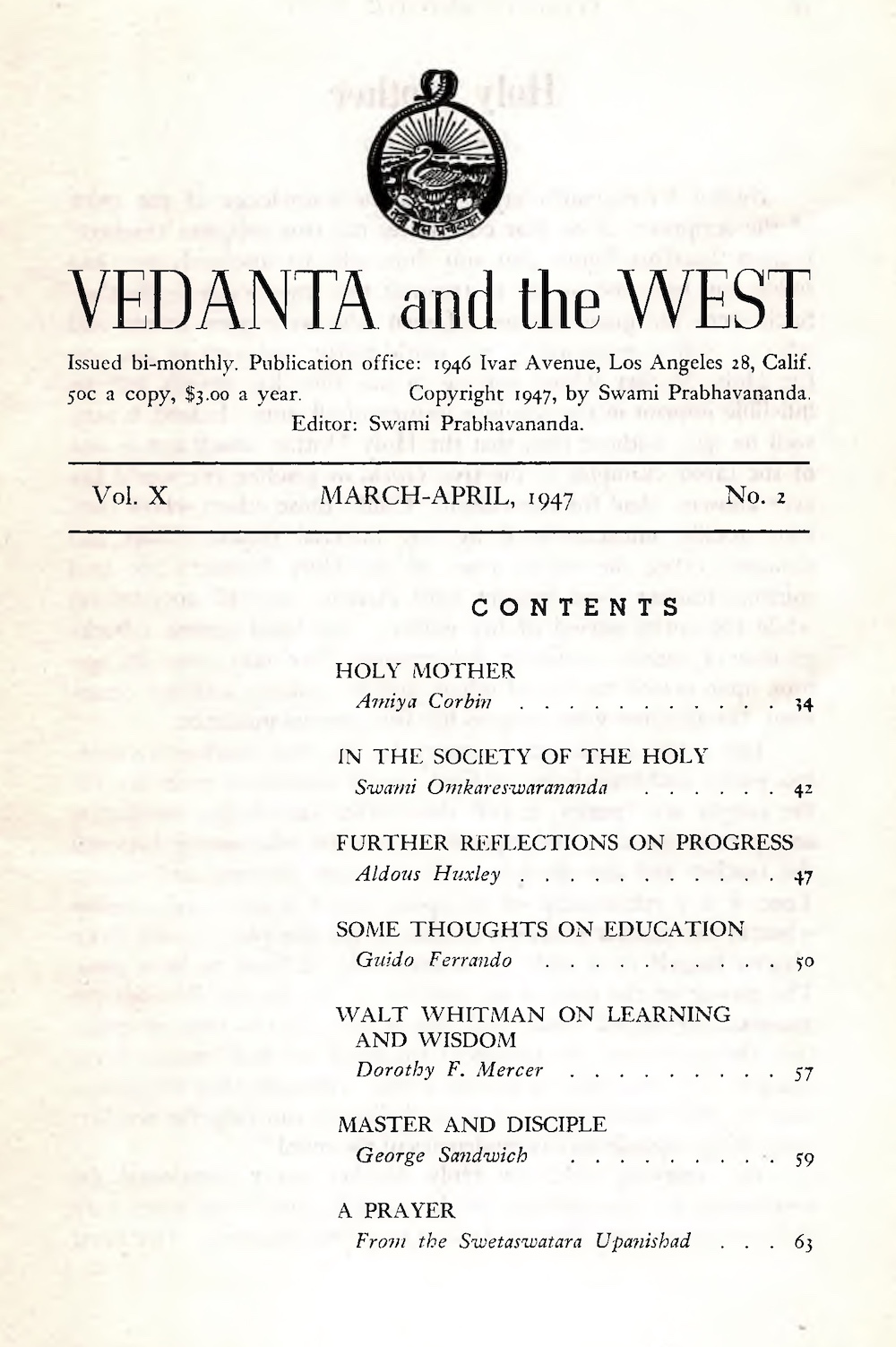
| Vedanta And The West V10 N2 Mar-apr 1947 | |
| Vedanta And The West V10 N5 Sep-oct 1947 | |
| Vedanta And The West V10 N6 Nov-dec 1947 | |
| Vedanta And The West V11 N2 Mar-apr 1948 | |
| Vedanta And The West V11 N3 May-jun 1948 | |
| Vedanta And The West V12 N6 Nov-dec 1949 | |
| Vedanta And The West V13 N1 Jan-feb 1950 | |
| Vedanta And The West N129 Jan-feb 1958 | |
| Vedanta And The West N142 Mar-apr 1960 | |
| Vedanta And The West N144 Jul-aug 1960 | |
| Vedanta And The West N145 Sep-oct 1960 | |
| Vedanta And The West N151 Sep-oct 1951 | |
| Vedanta And The West N156 Jul-aug 1962 | |
| Vedanta And The West N158 Nov-dec 1962 | |
| Vedanta And The West N174 Jul-aug 1965 | |
| Vedanta And The West N175 Sep-oct 1965 | |
| Vedanta And The West N176 Nov-dec 1965 |
|
|