
International Association for the Preservation of Spiritualist and Occult Periodicals


Periodical: Teozofski Radnik

Summary:   From Pat Deveney's database:

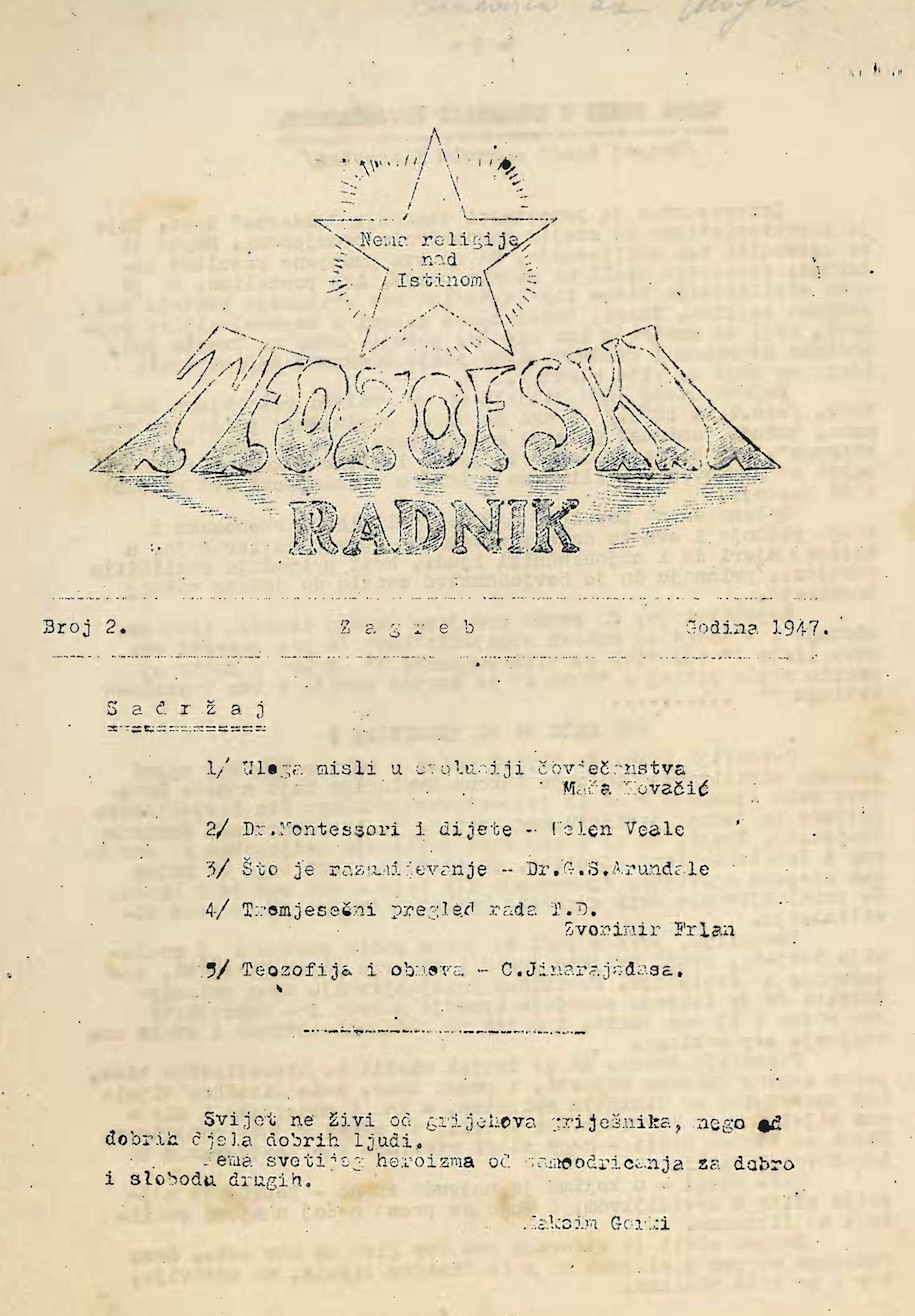
Teozofski Radnik [Theosophical Worker].
1939–1947
Zagreb, Yugoslavia. Language: Croatian. Publisher: Zagreb Theosophical Society in Yugoslavia.
1/1, 1939. 4-12 typed and mimeographed sheets. This was the bulletin of the Adyar Theosophical Society in Yugoslavia.

From Nemanja Radulovic: Teozofski radnik [Theosophical Worker]. Zagreb, Theosophical Society in Yugoslavia. Bulletin (c. 10 pages) with translations of Theosophical articles, news and reports from the Theosophical world in Yugoslavia and abroad; official statements of the Society’s president to the members. Typed and reproduced. In 1946 the Theosophical Society in Yugoslavia was banned by Communist government (the ban was lifted in 1966.). Only partially preserved: nr. 9-10. (October-November) 1939; June-July 1940; 1946, 1-7; 1947.nr.2-5. Available at: http://www.jivatma.si/gradiva/starejse-revije-casopisi/teozofski-radnik.

Other Sources:
Issues:Teozofski Radnik N1 1945
Teozofski Radnik N2 1946
Teozofski Radnik N2 1947
Teozofski Radnik N3 1946
Teozofski Radnik N3 1947
Teozofski Radnik N4 1946
Teozofski Radnik N5 1946
Teozofski Radnik N5 1947
Teozofski Radnik N7 1946
Teozofski Radnik N9-10 Oct-nov 1939
Teozofsko Drustvo Jugoslaviji Notice Jun 1940
Claude-Generated Themes:   Teozofski Radnik — the Theosophical Worker — was the bulletin of the Theosophical Society in Yugoslavia, published at Zagreb for its own membership. The surviving files span the war: a circular of 13 June 1940 addressed to dear brothers and reporting a White Lotus Day celebration held on 8 May, and numbered issues of 1945 and 1946 in which the society takes stock of itself again. The bulletin prints the Society's propositions as a creed — that what the religions personify as the Divine Trinity is a single function; that one Divine Life shines through every human being, so that humanity is a spiritual brotherhood; that human consciousness unfolds through cultures which succeed one another, each representing a stage. It also keeps the small society's own memory. One notice records that the first united circle, Sklad or Harmony, had completed twenty-two years by April 1946, that the authorities regarded it as a single body for the whole country though it was never uniform, and that Annie Besant herself had signed its charter; another dedicates an issue to a late president and gathers the recollections of members. It is the record of a national branch surviving a war and counting what was left.

Generated by Claude from the periodical's digitized text; a thematic reading, not a bibliographic description.
Topics:Theosophy