
| Periodical: | |
|
|
|
From Pat Deveney's database:
Tales of Enchantment; Or, The Book of Fairies. Twelve numbers survive although more were certainly published or planned since the last breaks off with a promise to complete the story. This serial and its innumerable companions among the Penny Bloods and Penny Dreadfuls of the This serial, constrained by its title to feature fairies, combined them with magicians, lost princes, temples of fire, magic stars, enchanted serpents, caliphs, spirits and water-spirits and their secret court, genii, demons, sylphs, astrologers, mysterious allusions to the unexplained, romance, etc.
|
|
| Tales Of Enchantment N1 Sep 15 1836 | |
| Tales Of Enchantment N2 Sep 22 1836 | |
| Tales Of Enchantment N3 Sep 29 1836 | |
| Tales Of Enchantment N4 Oct 6 1836 | |
| Tales Of Enchantment N5 Oct 13 1836 | |
| Tales Of Enchantment N6 Oct 20 1836 | |
| Tales Of Enchantment N7 Oct 27 1836 | |
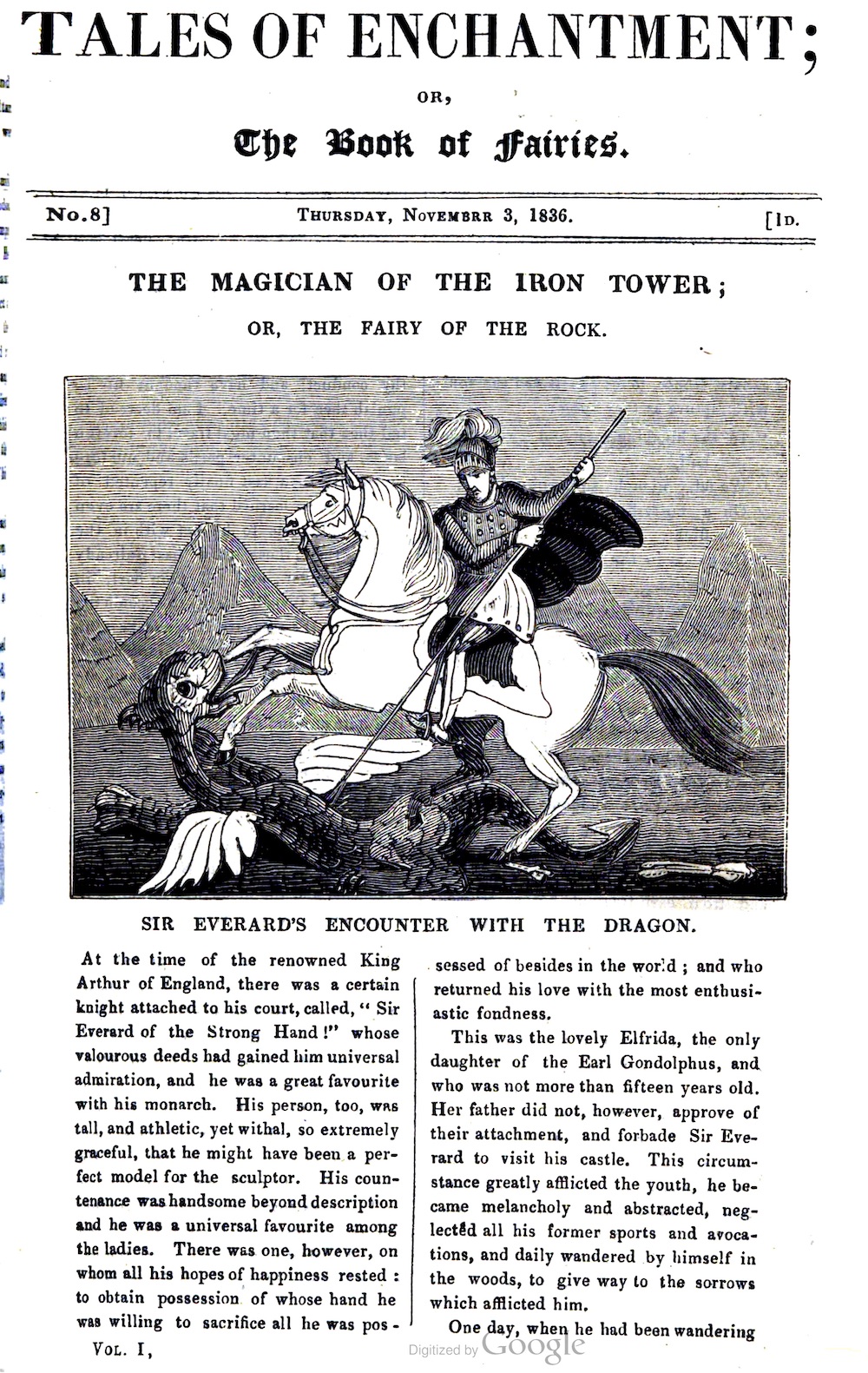
| Tales Of Enchantment N8 Nov 3 1836 | |
| Tales Of Enchantment N9 Nov 10 1836 | |
| Tales Of Enchantment N10 Nov 17 1836 | |
| Tales Of Enchantment N11 Nov 24 1836 | |
| Tales Of Enchantment N12 Dec 1 1836 | |
|
Tales of Enchantment; or, The Book of Fairies was a London penny weekly of 1836, issued on Thursdays, and it belongs to this archive as popular literature rather than as the organ of any movement. Its contents are serial fiction in the Oriental-tale and fairy-tale manner that the cheap weeklies sold by the thousand: a terrified old man surrounded in a glen by hideous beings with clubs, pleading that he does not wish to perish yet; a fisherman kneeling to thank the fairy who directed him in a dream to his catch, only for the fish to address him; a fairy telling a discontented girl that nothing but experience can cure this disease of the mind, granting her wish to be a queen, and giving her a ring to press when she repents of wanting to be grand. Magicians, talismans and astrologers move through the stories as stock furniture. There is no doctrine here and no movement behind it — but the enchanted world these stories sold for a penny is the same one that the occult and spiritualist periodicals of the following decades would find a readership in. Generated by Claude from the periodical's digitized text; a thematic reading, not a bibliographic description. |
|
| Astrology | Spiritualism |
|
|