
| Periodical: | |
|
|
|
From Pat Deveney's database:
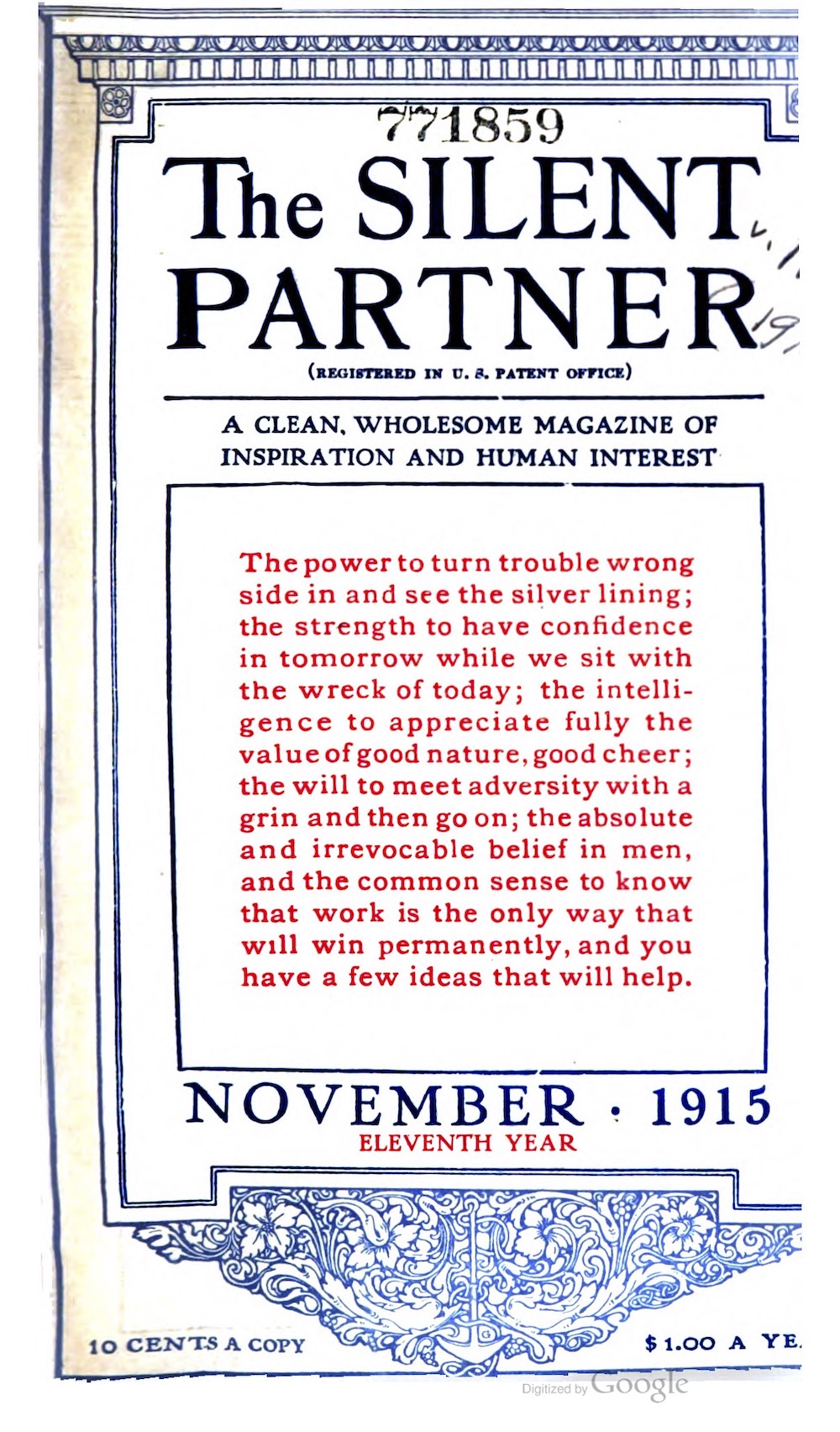
Silent Partner, The. Fred De Witt Amburgh (1866-1944) embodied the lessons of the Tom Swift books of his era that later were expounded by Norman Vincent Peale. He was the untiring advocate of cleanliness, hard work and savings as the path to success. He wrote The Buckup Book, By the Side of the Road, The Mental Spark Plug, Just Common Sense, etc., all filled with exhortations on the seriousness of life: "You will never get it unless you work for it." "No legitimate business man ever got started on the road to permanent success by any other means than that of hard, intelligent work, coupled with an earned credit, plus character." "Ambition may have to advertise, but ability advertises itself." Coupled with this was Van Amburgh’s belief in the power of "Mental Suggestion" -- although he fought shy of associating his work with New Thought. "The power of mental suggestion is of tremendous importance. For me to introduce in this magazine the subject of hypnotism, or any other idea of "hypnotism would open the way to criticism, condemnation, congratulation, approval or ridicule. We see so many indisputable proofs of the power of mental suggestion that to name them is of little consequence as compared with the thought, the fact. To influence a man's mind is more difficult than to change the course of a child's thoughts. The mature mind is more alert; it more often uses the frontal brain. But the back brain or the subconscious mind of a man will suggest discreditable acts that a boy would not think of -- another proof that it is not age but the set of brains we use." Dallas Theological Seminary; University of Colorado, Boulder, etc. |
|
| Silent Partner V11 1915-1916 |
|
|