
| Periodical: | |
|
|
|
|
From Pat Deveney's database:
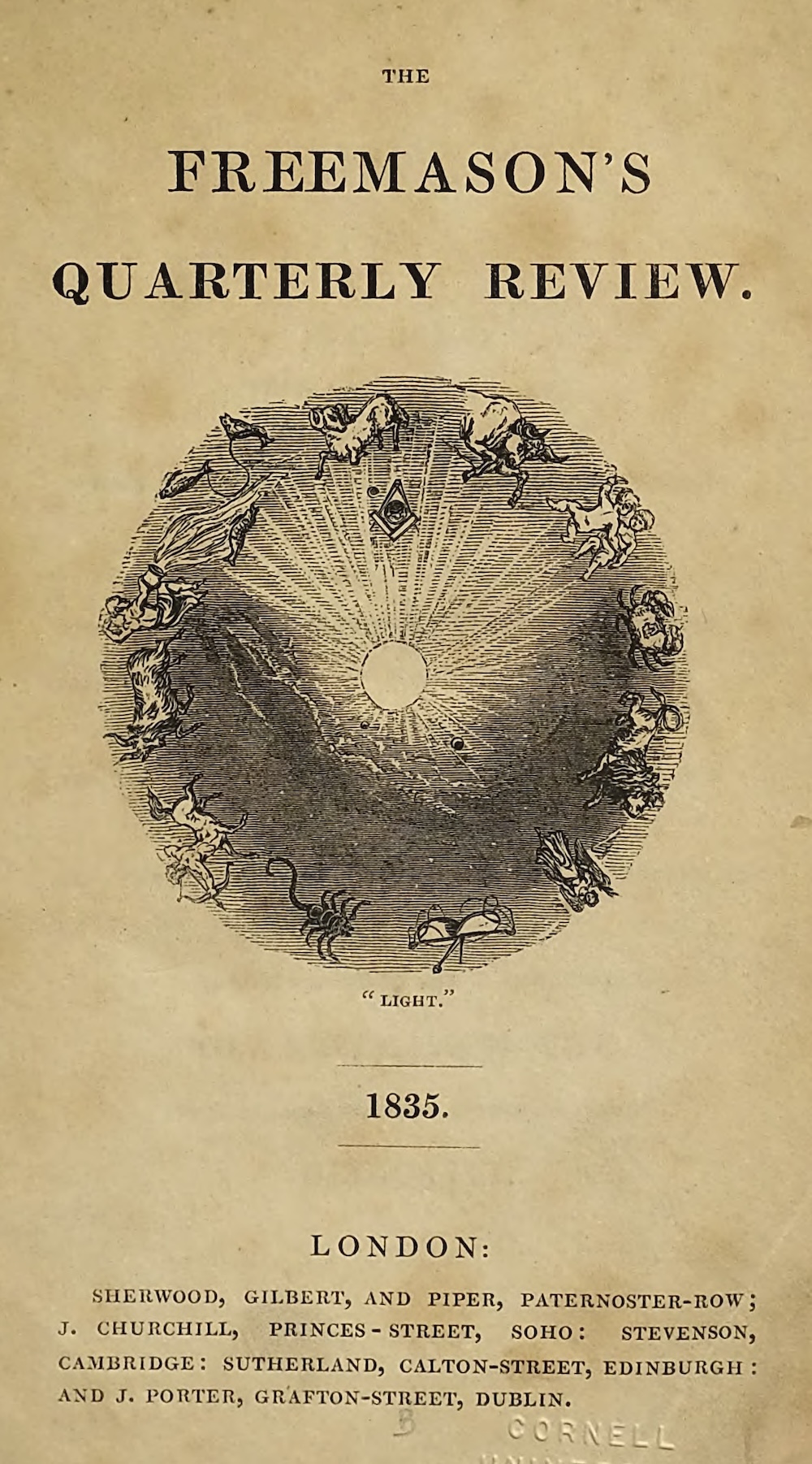
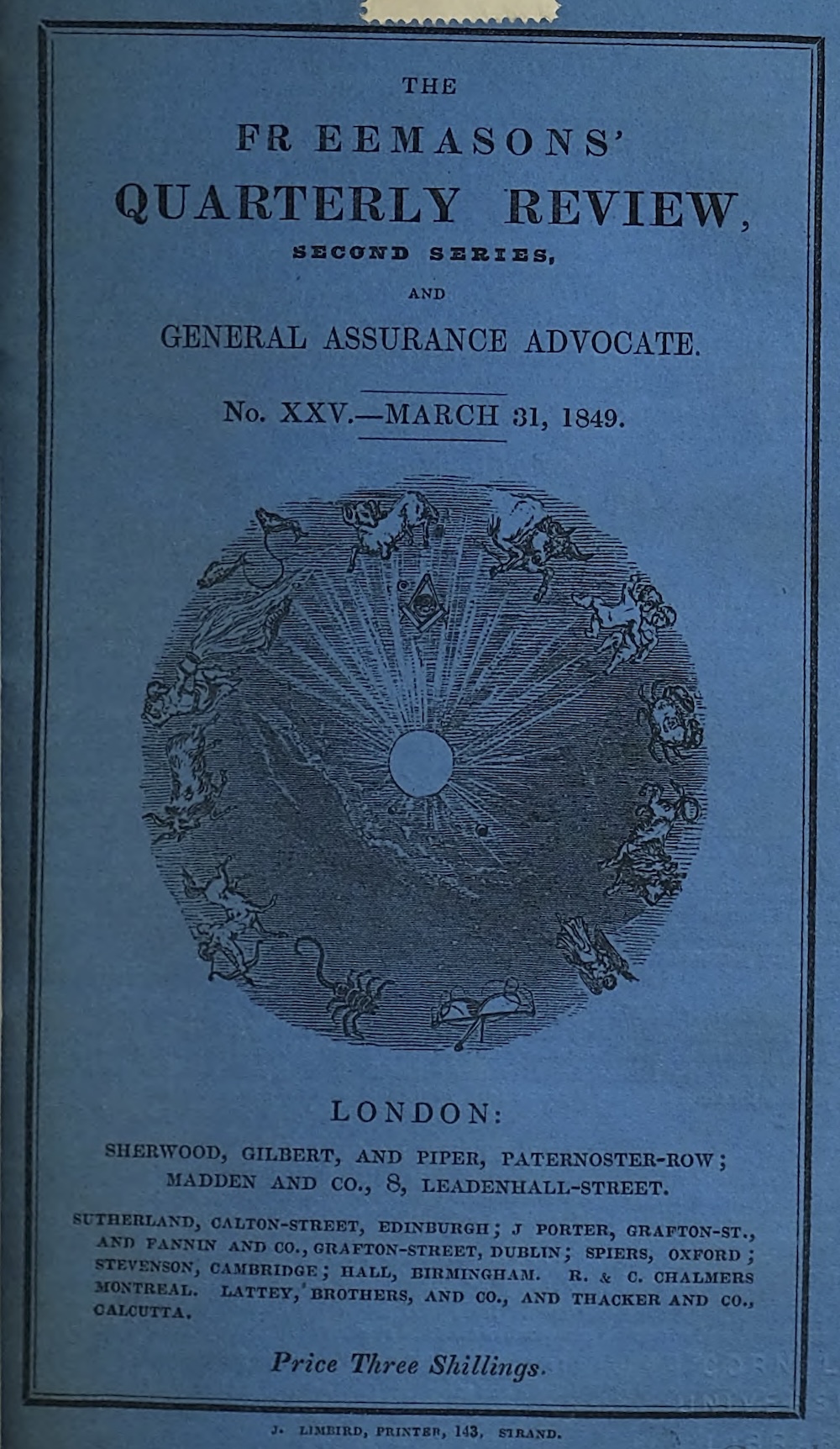
Freemason's Quarterly Review, The. This was both a standard "regular" Masonic journal, with the expected "intelligence"on Masonic events around Britain and essays on Freemasonry's history and significance, and a revolutionary attempt to free the Craft from the common snobbery of the times and especially from the domination of the Grand Lodge of England by the aristocracy that had prevailed since its founding in 1717. Crucefix (1797-1850) had been raised a Master Mason in 1829 and was devoted to making the journal an independent voice within Masonry for the rank and file members and the promoter of (moderate) social change. In the first issue he pointed out the journal's notable lack of the blazoned escutcheon that traditionally graced such ventures as the sign of aristocratic patronage. Early on, he quarreled with Augustus Frederick, Duke of Sussex, the autocratic sixth son of George III, who had been Grand Master of the United Grand Lodge of England since its inception in 1813, over Crucefix's effort to establish an independent Asylum for Aged and Decayed Freemasons -- which led in 1840 to his suspension from all Masonic functions and honors for six months and the journal's crusade against Grand Lodge's tyranny. This was smoothed over with Crucefix's apology and the duke's death in 1843. From 1847-1849 the journal assumed the title of The Freemason's Quarterly Review and General Assurance Advocate to reflect Crucefix's belief in life insurance as a necessary part of Masonic providence and charity. The historian George Oliver was a regular contributor to the journal, and it carried the usual poetry of the day and, occasionally, fiction. Because of its efforts to maintain an independent stand, the journal became the model for other Masonic journals throughout the rest of the nineteenth century in Britain.
|
| Freemasons Quarterly Review 1834 | |
| Freemasons Quarterly Review 1835 | |
| Freemasons Quarterly Review 1836 | |
| Freemasons Quarterly Review 1837 | |
| Freemasons Quarterly Review 1838 | |
| Freemasons Quarterly Review 1839 | |
| Freemasons Quarterly Review 1840 | |
| Freemasons Quarterly Review 1841 | |
| Freemasons Quarterly Review 1842 | |
| Freemasons Quarterly Review 1843 | |
| Freemasons Quarterly Review 1844 | |
| Freemasons Quarterly Review 1845 | |
| Freemasons Quarterly Review 1846 | |
| Freemasons Quarterly Review 1847 | |
| Freemasons Quarterly Review 1848 | |
| Freemasons Quarterly Review 1849 | |
| Freemasons Quarterly Review 1850 | |
| Freemasons Quarterly Review 1851 | |
| Freemasons Quarterly Review 1852 | |
| Freemasons Quarterly Review 1853 | |
| Freemasons Quarterly Review 1854 |
|
|